Wednesday, October 13, 2010

A safe arrival

We made it! More importantly, we made it with only one bag lost, and only one team member held at customs, and only two missed flights! Yay! Better still, no broken bones this year! Yay!

After two flights, one drive to the grocery store, an hour long grocery shop, us trying to overload a Taho (I'm not actually sure how to spell that...) with our luggage and extreme surplus of groceries, then another trip back to the airport to pick up our remaining team member, then a drive out to the dock, 20 minutes of transferring everything to the boat, a 30 minute boat ride, and 30 minutes of unloading, we were all pretty tired to say the least, and sweaty (it was about 25 degrees yesterday, how lovely!). I did, however, manage to visit the hornbills! Hopefully today we'll get some lemur time. Anyways, picture time! Isn’t it nice to look at pictures instead of reading my rants about palm oil?


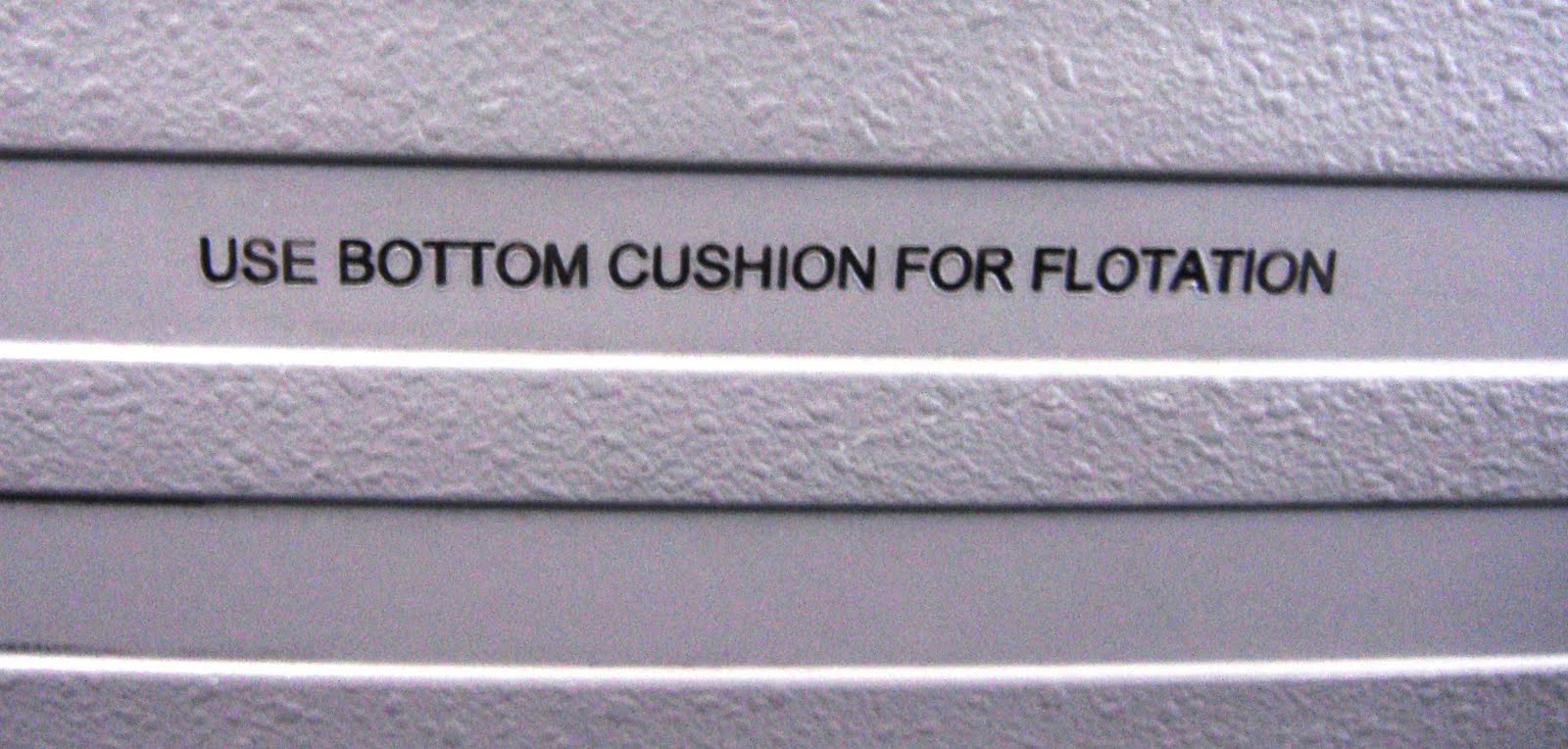
Fun fact! This is how you spell flotation, I always thought it was floatation...


Our trunk


Driving to the dock! Those are my feet, I had no other place to put them due to the amount of stuff we had to pack into the car.


The island has really large, impressive trees


Cameron


The wreathed hornbills


Rhino hornbill


Syrano trying to eat my camera, so awesome!


This is a rhino hornbill foot, it's about the size of my hand!


I leave you with a video of the hornbills making a display of some sort, they were all vocalizing and jumping around, pretty neat! Then some jerks (aka my research team) pulled up behind me in a vehicle and the birds were distracted by the sound, so that was the end of the display behaviour.


Sunday, October 10, 2010

Long time, no blog!


Long time no blog indeed! Life is hectic, my apologies! Also, I felt I didn't have much to write about, but I think enough time has gone by to fill my well of rants and random stories.

First off, today I saved a baby snake from the road, in return it peed on me but I loved it none the less!


In two days time I will be on the island playing with larger snakes, the kind that could kill me with one bite, so this little guy was good practice!

Speaking of which, this blog is hopefully going to get a lot more interesting. We ship out early Tuesday morning, assuming I finally take the time to pack up my junk, which so far is spread out all over the floor but none of it has found its way into the suitcase...

Anyways, today I wanted to rant a little about the stupidity of the general public when it comes to primates, in some cases many other animals. Seeing as how they play a huge role in our daily existence, I think it's time to be blunt about how blind we are to the fact that we have animals to thank for our lives, primates especially. First though, a video from Youtube popped back into my life today. Here's a fun story: last year I came across a video of a ringtailed lemur that was kept as a pet. The owner had named it and put a bow around its neck, and was feeding it chili from a can. This made me really mad. I mean, it was just about the cutest thing I've ever seen, there isn't much cuter in the world than a baby lemur, but it's the concept that pissed me off. That person probably didn't know how that lemur came to her possession, and if they did then I can say with certainty that they have no soul. Baby primates come with a hefty price tag on the pet market, but they also come with an ethical dilemma: to remove a baby primate from its mother, you have to kill the mother. Then the baby is transported illegally to the proud owner who might dress it up in human clothes and feed it improperly, and ultimately it will have a shorter meaningless life than its wild cousins. I got side tracked here, my story was that in my rage I started posting horrible comments to every video I could find of ignorant people with pet primates. Where as I didn't say anything violent to them, nor did I use any obscene language, my account was suspended because I was "harassing" people. Naturally, I just made a new account and kept doing what I was doing because I feel it's important for people to know the truth about the subject. As I was saying, one video popped back into my life today and guess what? The comment I left was still there, and it was the highest rated! 26 other people read what I had to say and understood that keeping a primate as a pet is wrong, and they pressed the "like" button in support! This makes me really happy and gives me hope for the future! Here's the video if anyone is interested: http://www.youtube.com/watch?v=2vnXxXFYMsQ

Now that my rant about primates as pets is over, I would like to acknowledge how every day we probably do something that wouldn't be possible without the sacrifice of an animal, in some cases a primate. Did you brush your teeth today? Did you put on deodorant? Did you wash dishes? Or take any type of medication? If you did, and you weren't using a product that said "No Animal Testing" then you have an animal to thank! I'm not going to type on and on about the ethics of animal tests, but I will take this time to point out that there are a lot of lives out there being wasted for stupid things. Do we really need perfume and cologne that was tested on animals? Do we really need shaving cream or eye shadow or laundry soap that put something alive through months of torture? I think the answer is no, especially because there are alternatives. I am proud to say that my make up is animal testing free, as is my deodorant, dish soap, household cleaner, and virtually everything else that I can control. However, this morning like several other women, I took a birth control pill. I'm sorry sheep, rabbits, cats, dogs, and chimps, I really really am, but what can I do? I can acknowledge the fact that I supported lab tests and I can be thankful for the lives that were sacrificed to ensure that I don't have any babies. I feel guilty about this every day, and in the future I will do my part to stop the continued use of animals in testing. For now, I just wanted to bring attention to how we can reduce our support of this vicious field, and by that I mean that we should try to support the companies that do not test on animals when we can instead of turning a blind eye to the cruelty we choose to support. Think about it like this: every time you swipe your card and buy some floor cleaner, that's another rabbit with bleach dripping into its eyes and you just paid for that to happen. BUT! If you swipe your card to pay for a bottle of floor cleaner that wasn't tested on animals, you supported the fact that life is not a commodity, yay!

Well this has been a depressing blog with lots of text and pretty well no pictures. I'll leave you with some cute lemurs and a really neat tree frog!

Monday, September 20, 2010

This has little to do with lemurs but...

... Hornbills are important too! Or at least I think they are, and I have some neat pictures of them so hopefully my readers and fellow lemur-enthusiasts will forgive my stray from the normal banter about how much lemurs rock.

That being said, here's my connection between hornbills and lemurs: my research site has an aviary which houses several hornbills and has even been successful in breeding a few which is an amazing feat! During my last visit to the island, whenever I had a few minutes away from collecting lemur data (those minutes were few and far between) I went and watched the birds.
Here's some background info for those of you who are unaware of what a hornbill is: A hornbill is a type of bird found in Africa and Asia. There are over 57 species, most of which, if not all, are endangered by hunting and habitat loss. Instead of me typing out their biography, if you're interested read about them on wikipedia (love love love wikipedia!) http://en.wikipedia.org/wiki/Hornbill

Anyways! I recently started researching lar gibbons at the Toronto Zoo with two other researchers (photos to come next week). During our first visit we were lucky enough to encounter a female Great Hornbill named Asha who has unfortunately suffered some brain damage from an attack from her mate and is now mostly blind. However, she is well cared for and lives in the zoo kitchen. I was lucky enough to be gripped by her presence, so to speak...

My other encounters with Great Hornbills have not been as pleasant as my encounter with Asha though. In the island aviary is Joe. Joe is an adult male who is bonded to his mate Josephine ,who is lovely, but Joe is a complete terror. Where as he is amazing to look at, standing at a striking 4-5 feet from beak to tail, he has a double chain fence on one side of the enclosure to ensure the safety of unsuspecting passersby. Here is Joe-


In case you were wondering, that's horse meat stuck on his beak. That's right, horse.


And this is Josephine:


Josephine is really old, I'm pretty sure she's over 60 which is impressive for a hornbill. Fun fact: you may have noticed that Joe has a red eye and Josephine has a blue eye. This is how you can easily tell apart the sexes of this species, kind of neat!

Moving on from great hornbills, I also spent some time with wrinkled hornbills, this is Mr. Toots:

And finally, the extremely gentle, impressive, and playful rhinoceros hornbills!


In case you were wondering, the large protrusions from the upper part of the beaks of the hornbills are called casques (pronounce ca-sks). They are hollow and either serve as an instrument of sexual selection, or aid with long calls, the exact function is unknown.

I mostly just wrote this post to share the pictures, but something else has come to mind: what can we do to help stop the extinction of these amazing birds? Well, not too much, but at a consumer level, try buying things without palm oil in the ingredients. Palm plantations are responsible for destroying rain forests and habitats for all kinds of amazing creatures. At the risk of sounding morbid and extremist, think about it like this: next time you buy a cheap chocolate bar or a pack of instant noodles, not only is it really bad for you but the palm oil filler is responsible for the displacement and death of many hornbills. What's good to know is that Nestle has acknowledged this problem and is starting to eliminate palm oil from their products! Hooray for a step in the right direction!
Keep it real.

Wednesday, September 8, 2010

Of mice and lemurs

Yesterday I had to mow the lawn. I really don't like the concept of lawns in general, and the idea that I have to waste two hours of my day killing plants, insects, and other things that live in the lawn, not to mention wasting gas, makes me pretty angry. That being said, it's important to help out around the house and if mowing the lawn is my contribution then it must be done.

When I pulled the lawn mower out of the shed and started it, smoke came out, as did a pile of fluff: there was a mouse nest in the mower. No mice were killed, but their nest had jammed up the engine, so apart the mower came! My father had the idea to get the leaf blower to force the fluff out as it was too thick to vacuum. Leaf blower in hand, I reach down to start it and what happens? A big Momma mouse falls to the ground from the blower with 4 babies attached to her mammary glands! She hit the ground and for one moment looked up at me, possibly more dumbstruck than I, and then started running across the lawn, babies in tow. One more baby had dropped from the leaf blower, and two had detached from her as she ran. I made an effort to re-assemble the family but to no avail.
This got me thinking, that momma mouse made a tough choice fast. Sacrifice three pups (are baby mice called pups? I think so...) to save herself and the others, or try to run with 6 pups in tow and risk them all getting eaten. Where as I sympathize with the babies who probably didn't make it through the night, I have to give props to the momma, I think she made a good choice. Not only that, but are any of us tough enough to attach more than our body weight to our nipples and run for miles? Probably not. What does this have to do with lemurs? Here's a fun story about lemur reproduction and social structure.
This is Newport. She is the oldest lemur at my site, coming in at 16 years of age. Newport has had over ten babies, and in her life time has spent years carrying them around on her back and breast feeding them. As a result she has pretty severe arthritis in both of her hips. But that doesn't stop her from having more babies or running around with the rest of the troop.


Ringtailed lemurs are female dominant, so when they come across food, or when they change locations, the females are always first or leading. Even when it comes time to mate, the females will present to the males. If they males try to do anything without submission to the dominant female he's cruisin' for a bruisin' as they say. Below is a screen capture taken from a video of mating from last season. Below we see Newport (bottom) and Ronnie (top). The males, after copulating, do this funky thing called a Post Ejaculatory Clasp. This means that they stay clasped to the female for hours after mating to ensure no other males come mate with her. And by clasp, I mean that he pretty much piggy-back-rides her until he gets bored. So below, poor Newport with her arthritic hips, is carrying around a male.


As if it can get worse than that, when he lets go she is still looking to mate. While she presents to him, he just sort of sits there licking his... parts.


Why am I telling you this? Seeing this happen to Newport (and pretty much all other females) and seeing that momma mouse yesterday made me realize how strong females are. We have to gestate, birth, sacrifice, wait, and put up with a lot of crap for the survival of our species. This is not to say that males are totally useless, but we definitely take first for the amount of physical and psychological junk we have to deal with. Newport carries a male on her back with two bad hips, a mother mouse desperately drags her infants from her glands, at some point in my life I will probably have to push a human through my body. I guess my point is that I never realized how amazing females are until I saw how brave and enduring they are in the wild.

Here are the babies that I tried to help. I gave them some formula and cozied them into some socks and a piece of their nest. I left them in a sunny spot by the shed.


This is a picture of me with a gopher tortoise last season, note my broken nose and double black eyes.


So what happened to my face? I didn't actually get attacked by a bear as I hinted toward last week. On our way through the airport I tripped over a piece of metal and had a bad landing. I was carrying about 50 pounds of electronic equipment which came down on my head, resulting in my broken face. I skinned two knuckles, and had some severe bruising on my knees. I also split my bottom lip in half and shifted two of my teeth. With blood literally squirting everywhere, bruises already forming around my eyes, and skin hanging from my hand, I got up and said "Hurry up! We're going to miss our flight!" and boarded the plane. As I walked down the path to my seat people turned their faces in horror and someone asked "Wow miss, were you attacked by a bear?" I said yes. My injuries were pretty severe, but I boarded the plane regardless, I guess I am a female after all!


(This picture was taken after I cleaned the blood off and took several anti-inflammatories, my nose didn't stop bleeding for three days and I glued my lip shut)

Thursday, September 2, 2010

31 days

Long time no post!

With my exams and 20 page papers finally completed, graded, returned, and finished forever, I am now a free woman with time to blog. The problem is that I am now distracted with my job as a health promoter (along with being a lemur researcher I work with a wellness centre promoting sexual health to anyone who wants to listen), and I have ignored issues in modern primatology and am lacking issues to write about at present. However, with this years field season quickly approaching (in 31 days, hence the title), perhaps now is a good time to make a virtual list of things that need to be done, and things that are good to know about field work in general (for all of you aspiring primatologists out there!).

First up: footwear.

Last season I was warned about the amount of poisonous snakes at the field site. Not many people love snakes more than I, so I was really excited to hear this even if it potentially meant my untimely demise. If someone on the island were to be bitten by a snake it would take at least 5 minutes for a helicopter to come and airlift them to safety, solution? 1) instructional video on what to do in the event of a snake bite, 2) SNAKE BOOTS!
Snake boots are boots that are snake bite proof. I ordered a pair last season made by Redhead and they were great! Not only did they stop a water moccasin from killing me, but they kept the chiggers away from my legs. Problem is that I ordered them too big (everything from the states seems to be bigger) and they're hot. So this year I think I might take the risk (and stop chasing the snakes around) and wear Blundstones instead. I highly recommend Blundstones to everyone: they're not cheap but they are the best boots for walking, winter, running, you name it.

Second: Sunscreen and sunglasses

Third: Good radio equipment, not just for tracking animals but for emergency use. There are wild boars at my site, I feel comfort in knowing that I can use a radio to call the rest of my team to say "uh.. hi guys, I'm being eaten alive by feral pigs, by the time you get here I'll be dead, but could you tell my mom I love her? Thanks, bye!"

Fourth: Make sure your passport does not expire in the time you're out of the country (as mine is about to)

Fifth: Get travelers insurance

Sixth: When working with primates it is possible for them to catch TB from humans (and viceversa) so it's important to get a TB test.

Seventh: Bug spray
Eighth: Bug spray
Ninth: Bug spray
Tenth: Bug spray

You'll also need a deck of cards, a good backpack, movies if you have electricity, and books, lots of books. Doing field work can be very quiet and isolated. If you aren't good with silence for long durations, or in some cases being alone for long durations then this job isn't for you. That being said, if you do like being away from your family and friends for long durations, getting eaten alive by gnats, risking your life in the presence of boars and snakes, being torn apart by saw-palm, and getting peed on by lemurs, then this is your ideal profession!

For those of you who skipped through my text, picture time = now


Field work means leaving your pets with a sitter. In my case, I have to leave my babies Tammy and Stella to my mom for 2 months, sniff sniff...


This is my field sweater complete with lemur ears (soon to have a lemur tail). This is also going to be my Hallowe'en costume, and yes, I am cool enough to wear an ear sweater.


Apparently last year when I checked off "was not on a farm" at the airport, I forgot to mention the lemur poo stuck to the bottom of my boots... so gross.


Blundstones <3


One of the perks of field work is exploring places where not a lot of other humans have been, which for me means finding antlers and shells and making jewelry holders!


Here are my snakeboots, and this is me with a broken nose, double black-eyes and swollen face, testing GPS collars. Why do I have a broken nose, double black-eyes, and a swollen face? Tune in next week for "Carey got attacked by a bear"


Thursday, August 12, 2010

What we can do, part 2: Why we should

I realized after posting my last entry that I did not include reasons why we should care about lemur conservation, or primate conservation in general. I mean, really, what have lemurs done for us? What have other primates done for us? Why should we be concerned about the conservation of the rainforest and other environments when we could just plow them down and get more oil and profits?
I guess this is a question of debate, but here's what I think:


I think biodiversity is important, really important. I think that lemurs and other primates are a critical component in the preservation and recreation damaged environments. I think that lemurs and other primates are aesthetically pleasing, that is, they make me happy to look at. I think that lemurs give Madagascar a sense of identity and importance and promote eco-tourism which can boost their economy. Finally, though I do not agree fully with this, primates are an extremely useful resource in the medical field. Let me stress again, I do not agree with the continued use of primates as test subjects. This is a touchy subject to talk about, but it might be a convincing one for those who are not as inclined to save species based on compassion alone.


Biodiversity is another tricky subject to blog about: how can I possibly explain why it's so important when I don't even have a good grasp on what it means? Four years at a top university cannot teach what biodiversity really is, I think it's something you have to see in the flesh, but here's an example (or at least, I hope it's an example!):


I'm looking out my window and I can see a cedar tree, a gold finch, some maple trees, a field of what are probably Monsanto soy beans (gross gross gross, burn Monsanto, burn!), some crows, couple of spiders, flies, a bergamot plant, 2 plum trees, and some various wild flowers and weeds along the field edge. Ok, so let's say I go outside and hack down the maple trees. Now there is no shade coverage, so any shade dwelling plants under the maples will die. Any bugs that lived in the shade dwellers will also die or relocated, and anything that ate those bugs will die or relocate. Anything that was living in the maples, probably the gold finches, they just lost their babies and nests, so some of them died and the rest will have to re-locate. When the gold finches lived here they ate some bugs (let's say they ate the spiders and flies), and they ate seeds of the wild flowers and weeds. They digested the seeds, and when they shat them out the seeds were ready to grow. But since I cut down the maples and ruined their homes, the gold finches won't be here to spread the plants anymore. Also, the flies laid their eggs in the moist shady area under the maples, but that's not there anymore. So the flies will decline in population which means no more food for the spiders. So they're gone too. Now I'm left with a plum tree, a cedar tree, and some crows. The crows come and eat my plums because there isn't anything else for them, so now I have a cedar tree and some hungry crows. And that is what I will see when I look out my window from now on: crows and cedars. That kind of sucks! What if I needed one of those wild plants to make tea or something? I guess I should have thought of that before cutting down the maples...


I guess we should have thought of the consequences before cutting down the rainforest and making our distant relatives endangered. By endangering them, we might be inadvertently endangering ourselves too. Here comes the controversy, brace yourself:


Have you ever had an inoculation? Ever taken an anti-biotic? Had surgery? Did you use toothpaste this morning with fluoride in it? Have you used a household cleaner? Did you put on deodorant today that has aluminum in it?
If you answered yes to any of those questions, you have a primate to thank for it. Primate testing has had its benefits- cancer treatment, malaria treatment, organ transplants, you name it- all of it came from testing procedures on primates, more so, great apes. But here's what's wrong with this situation (other than the ethics of lab test and treatment), we have exploited primates for our benefit, and now they're endangered. If we keep abusing them by capturing them for pet trade, bushmeat, habitat loss, and capture for testing, there aren't going to be any left! So for those of you who do not think that biodiversity alone is a good enough reason for conservation, think about the future of yourselves and your children, and how we will probably still be afflicted by AIDS because we can't use apes to save us. I'm a huge hypocrite for writing this, but it's not like I can stand completely opposed to animal testing, I have had vaccines and they have probably saved my life. However, I do think there are other and better options for medical advances, but that's a different blog.


This is becoming a long and heavy post, so I'll cut it off and show some pictures of adorable lemurs and other primates. I want to keep seeing these guys in the future, I hope you do too.


*Note: most of these are not my own photographs, no copyright violations intended*

Tuesday, August 10, 2010

What we can do

Hello again!

In March I went back to my high school to give a few lectures about primates, conservation, and the work I do with lemurs. The students were seemingly very receptive of what I had to say, they listened to my facts and stories with very few disruptions, and actually asked me a lot of really valid questions which gives me hope for the future. Anyways, across the 4 classes I spoke in, a question recurred: What can we do to help the lemurs? (or help the primates in general).


As you probably know, the situation for non-human primates is getting a little grim to say the least. Deforestation has desecrated much of their natural habitat, then there's the issue of bushmeat hunting, illegal pet trade (and legal pet trade), loss of genetic diversity, and animal testing (but let's save my problems with animal testing for another blog entry... I have a lot to say on that topic, most of which will be highly offensive to most). So what can we do? Well, there are a few options: become a primatologist (which equates to at least 7-9 years of school), donate to reliable species conservation (such as the Jane Goodall Institute), become socially aware of how we are responsible for species loss and endangerment, consider eco-tourism for your next vacation and check out a primate reserve (or any other species!), or perhaps take a more grass-roots approach...


Personally, outside of the research I'm part of, I'm really into lemur conservation. That is not to say that I don't care about the rest, I really really do, but lemurs have a special place in my heart. My contribution to the conservation of other primates was the elimination of palm oil from my diet. This is a pretty extreme move given that palm oil is in a whole whack of things, but I am an extremist and I can't eat anything with palm oil in it knowing where it comes from and what died so I could eat a cheap chocolate bar. If you don't know about palm oil, look it up! Palm plantations (most of them anyway) are planted in what used to be the rainforest. What lives in the rainforest? Umm... most things, but specifically Orangutans, and do you know who suffers from palm oil plantations? Orangutans!


What can you do that isn't as extreme as that? Try buying EnviroKidz "Leapin' Lemurs" cereal. It's organic, gluten free, and as far as childrens cereals go, it's actually pretty good for you. EnviroKidz donates a certain percentage of every sale to a conservation foundation (what you buy is what you support, they also have koalas, gorillas, etc.).


^^ Love.

Also, you can search the internet for the species survival plan of your favourite animal and try purchasing from them. I bought some buttons from the "Catta Closet" at Christmas and gave them to people in cards, cute and helpful to the species!


You can also promote awareness through exposure. For example, Webkinz has a ringtailed lemur plush. Where as they do not seem to donate anything to conservation, people who see the plush toy and ask what it is get an earful from me about lemurs, go-go-gadget awareness!

Finally, you could try a grass roots movement. I am planning on launching a line of lemur jewelry when my exams are done. Half of the proceeds will be donated to a lemur conservation movement, they will look something like this:


^^ the lemur body is 1/2 an inch, the tail is flexible too!

I might also do up some Sifaka (because I love love love sifaka!)


^^ Bendy sifaka with baby keychain charm (and a random piece of spine, I love bones too)


So there are a few options for helping with primate conservation! And here are a few neat links, the first is the species survival plan for ringtails, the second is the website of Erik Patel who is doing some amazing work with Silky Sifaka (which are in the top 25 most endangered primates), and there's a link to an article about palm oil and orangutans.
http://ringtailedlemurssp.org/
http://erikpatel.com/
http://www.janegoodall.ca/Palmoilfrenzythreatenstowipeoutorangutans.php

And that's all for now! I hope this wasn't too long and boring, and I hope you're inspired! The world is amazing and the species on it are what make it so. I don't want to show my kids a picture of a lemur, I want them to be able to see lemurs in the wild, don't you? My worst nightmare is to one day hear the words "Mommy, what's a tree?"
Peace